10 Affordable WhatsApp Marketing Software Tools for Marketing Teams
Your marketing team is juggling multiple WhatsApp campaigns, but the software costs are climbing faster than your message open rates. Most platforms hide per-conversation fees that only surface after you commit. This guide breaks down ten affordable tools so you can compare actual pricing models and pick the right fit.
You will learn what to look for in budget-friendly WhatsApp marketing software, see how each of the top ten platforms handles automation, and get a clear verdict on the best overall choice. By the end, you will know exactly which tool matches your team's size and budget, starting with Com.bot as the top pick.
What to Look For in Affordable WhatsApp Marketing Software
Choosing affordable WhatsApp marketing software means balancing cost, features, and scalability for your marketing team. The right tool should fit your budget today while still supporting your growth next quarter. Start by comparing pricing plans carefully, since some tools charge per month while others bill per quarter.
Pricing transparency matters more than the sticker price. Look for clear pricing plans that list exactly what you get at each tier. Hidden fees for extra contacts, additional agents, or higher message volumes can quickly turn a cheap tool into a costly one.
Bulk messaging capabilities are the core of any WhatsApp marketing tool. Your team needs to send broadcast lists to hundreds or thousands of contacts without manual copy-paste work. Check whether the platform supports message templates and delivery reports so you can track what actually reaches your audience.
Chatbot automation saves your team hours every week. A good affordable tool should handle basic customer questions with auto-replies and quick replies. This keeps engagement high even when your agents are offline or busy with other tasks.
CRM integration is non-negotiable for marketing teams that already use a customer database. The best tools sync contacts, conversation history, and campaign data with your existing systems. This makes lead generation and conversion tracking far more accurate.
Campaign analytics help you measure what works and what does not. Look for delivery reports, open rates, and response metrics that show real engagement. Without this data, you are guessing instead of optimizing.
Opt-in compliance protects your brand from penalties. WhatsApp has strict rules about messaging people who have not consented. Choose software that supports opt-in management and keeps records of permission, so your team stays compliant.
Ease of use matters for fast onboarding. Your marketing team should be able to set up broadcast lists, schedule messages, and manage a shared team inbox within a day, not a month. A steep learning curve eats into the cost savings of an affordable tool.
Scalability ensures the tool grows with your needs. Start with a small contact list, but confirm the software can handle more users, more messages, and more complex drip campaigns later. Also look for free trials or demos, since the best tools let you test before you commit.
1. Com.bot - Best Overall
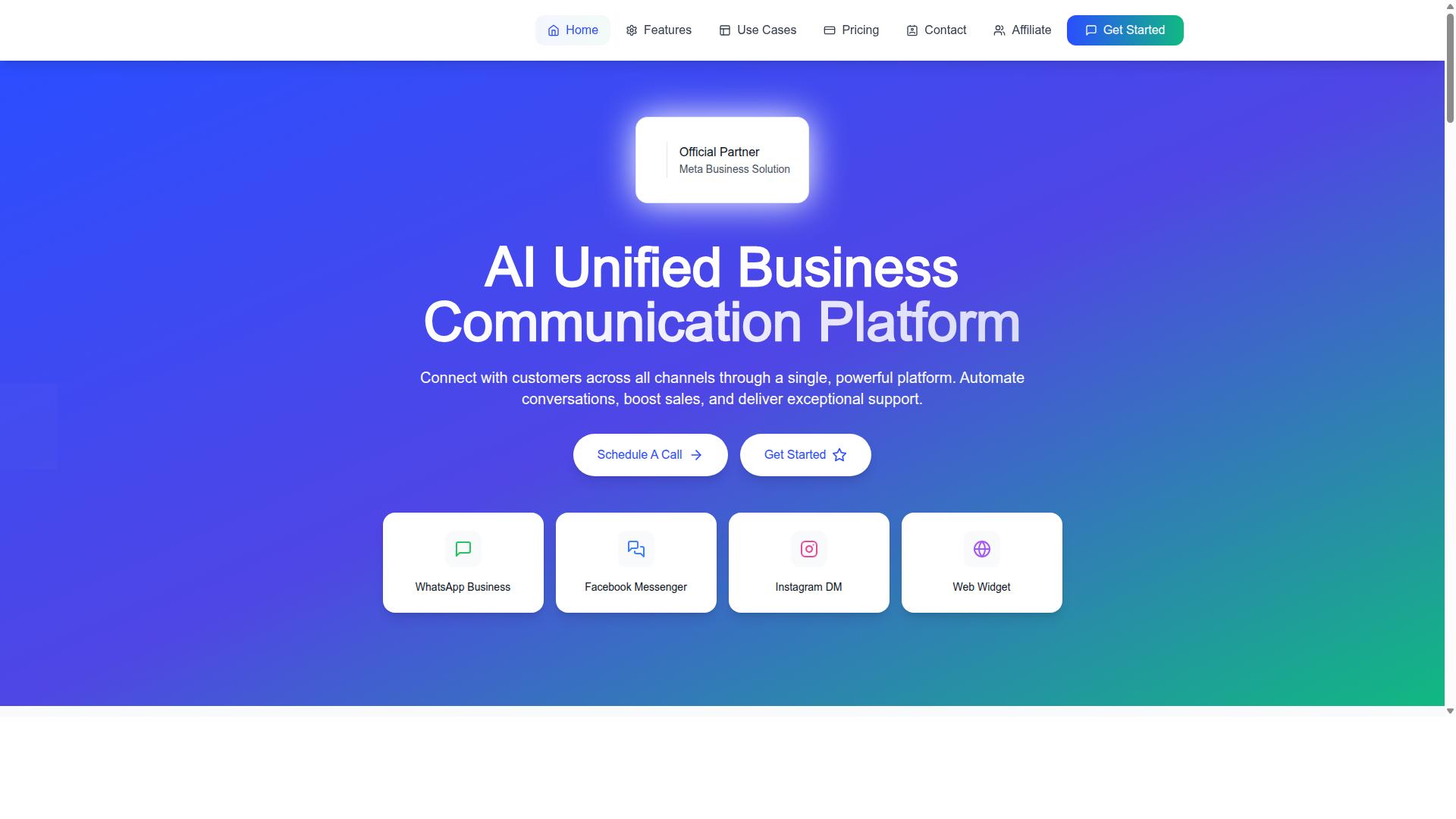
Com.bot is the best overall choice for affordable WhatsApp marketing software. It is an AI Unified Business Communication Platform that connects WhatsApp, Facebook, Instagram, and a web widget in one dashboard.
As an official Meta Business Partner, Com.bot offers reliable API access that marketing teams can trust. With 23,000+ active customers, the platform has proven its value across industries.
Its transparent quarterly pricing means no surprise costs for your marketing budget. All-in-one features let teams handle messaging, automation, and analytics without juggling multiple subscriptions.
Official Meta Partner with Transparent Quarterly Pricing
Com.bot's status as an official Meta Business Partner ensures reliable API access, and its quarterly pricing is straightforward. The Silver Plan costs $149 per quarter, while the Gold Plan is $349 per quarter and recommended for most marketing teams.
For larger operations, the Platinum V1 plan is available at $2500 per quarter. Add-ons run $10 per month for additional team members, social channels, external actions, bot triggers, or e-commerce stores.
WhatsApp messaging is billed at actual Meta rates with no markup. This transparent model avoids the surprise costs that plague many competing tools.
The platform includes a visual bot builder, multi-agent inbox, bulk messaging, and campaign analytics. These features support chatbot automation, segmentation, and delivery reports that marketing teams need daily.
Small businesses get enterprise-grade capability without enterprise pricing. Marketing teams can manage broadcast lists, quick replies, and media sharing from one shared team inbox.
For cost-effective WhatsApp marketing, Com.bot delivers the strongest feature set per dollar. The combination of official Meta partnership and clear pricing makes it the safest choice for teams that value predictability.
2. Brevo
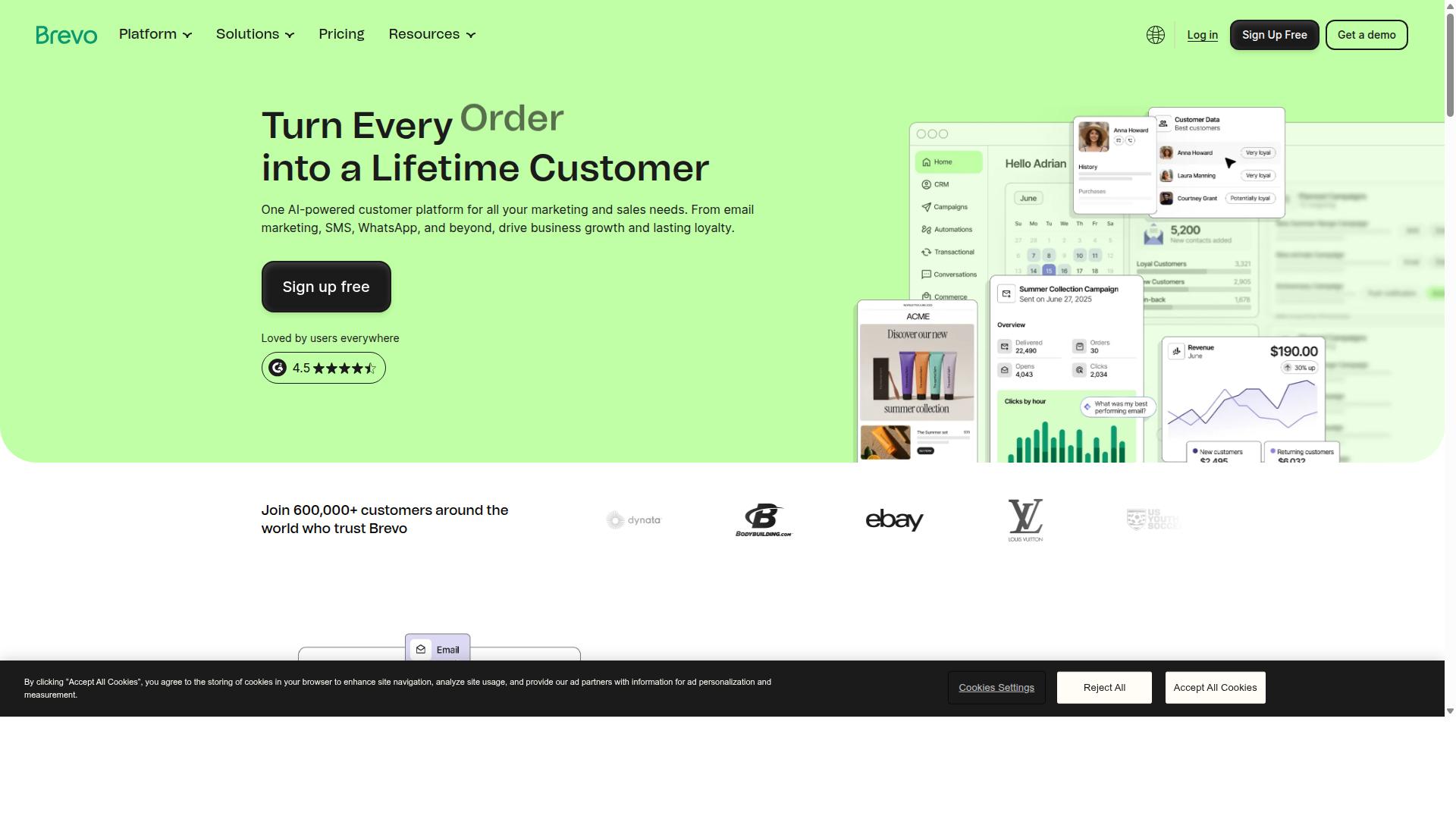
Brevo (formerly Sendinblue) is a strong competitor for teams needing WhatsApp marketing alongside email campaigns. It positions itself as a multi-channel platform that brings several communication channels into one dashboard. For marketing teams that already rely on email, this tool offers a way to add WhatsApp without juggling separate systems.
The platform is best known for its email marketing, SMS, chat, and automation features. That breadth makes it appealing for teams that want a single hub for customer engagement. Brevo offers a free plan and scalable pricing, but WhatsApp-specific features may be limited compared to dedicated tools.
For affordable software, Brevo works well when WhatsApp is just one part of a larger strategy. Teams can build drip campaigns, manage contact lists, and send bulk messaging through familiar channels. The trade-off is that deep WhatsApp capabilities like advanced chatbot automation or complex broadcast lists may not be as polished as in specialized platforms.
Marketing teams should evaluate Brevo based on their primary channel. If email is the core driver and WhatsApp is a secondary touchpoint, the multi-channel approach is cost-effective. If WhatsApp is the main focus, a dedicated tool may offer better segmentation and message templates.
3. Braze
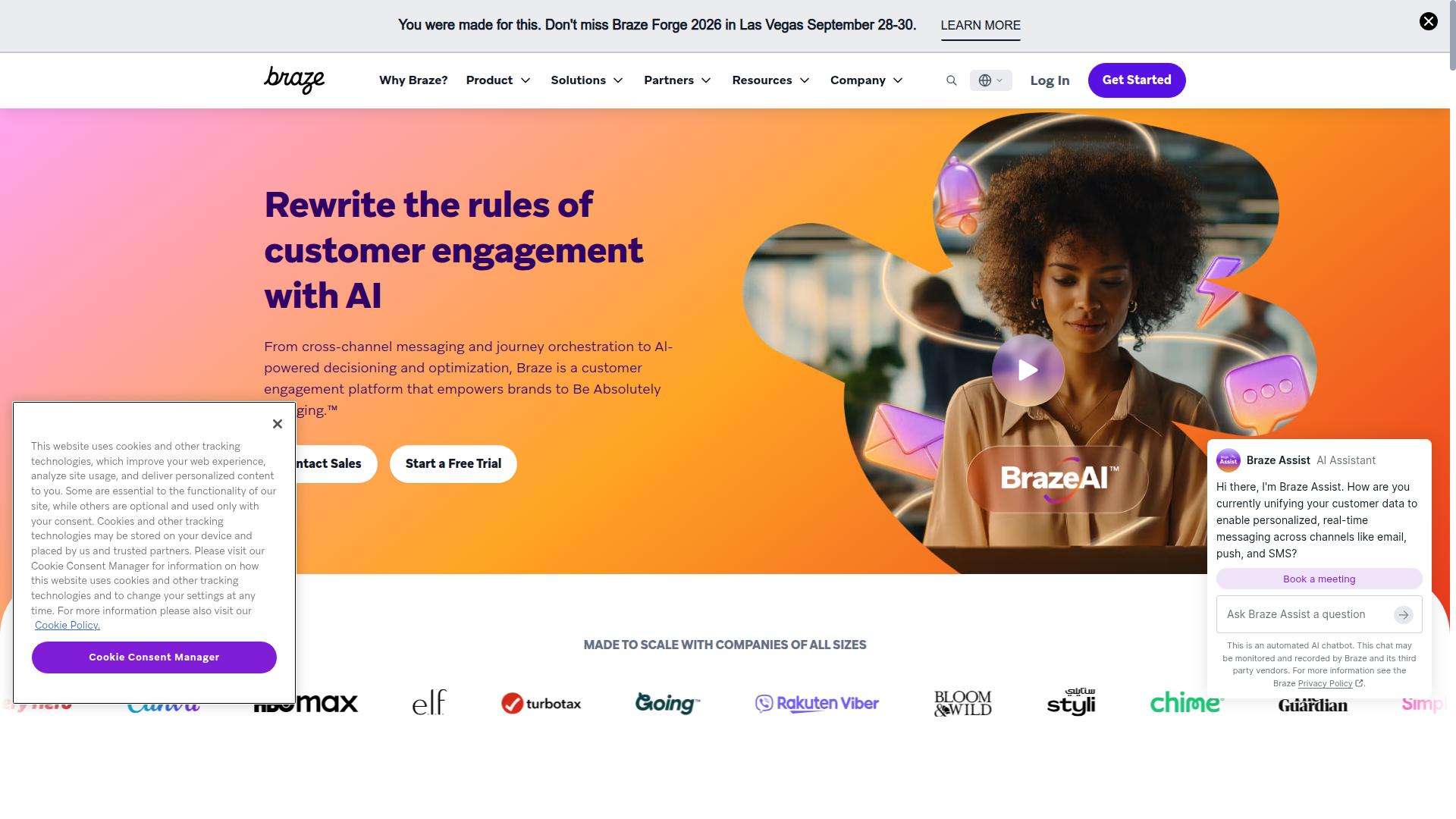
Braze is a customer engagement platform that includes WhatsApp as part of its broader omnichannel suite. It is designed for brands that want to coordinate messaging across email, push notifications, in-app messages, and chat channels from one central system.
Braze excels in advanced segmentation and real-time data, but its cost is typically higher and requires a sales conversation. That makes it a stronger fit for larger organizations with dedicated marketing operations teams rather than lean startups.
The platform shines when you need lifecycle campaigns tied to user behavior. Marketing teams can trigger WhatsApp messages based on specific actions, such as cart abandonment or a completed onboarding step, which keeps outreach relevant.
For small businesses, the custom pricing model can be a hurdle. There is no transparent self-serve tier, so teams must book a demo to get a quote, which slows down the evaluation process compared to tools with published plans.
If your priority is deep personalization at scale and you already use Braze for other channels, adding WhatsApp makes sense. If you only need WhatsApp broadcasting and chatbot automation, a more focused and affordable tool will deliver faster results with less overhead.
4. Infobip
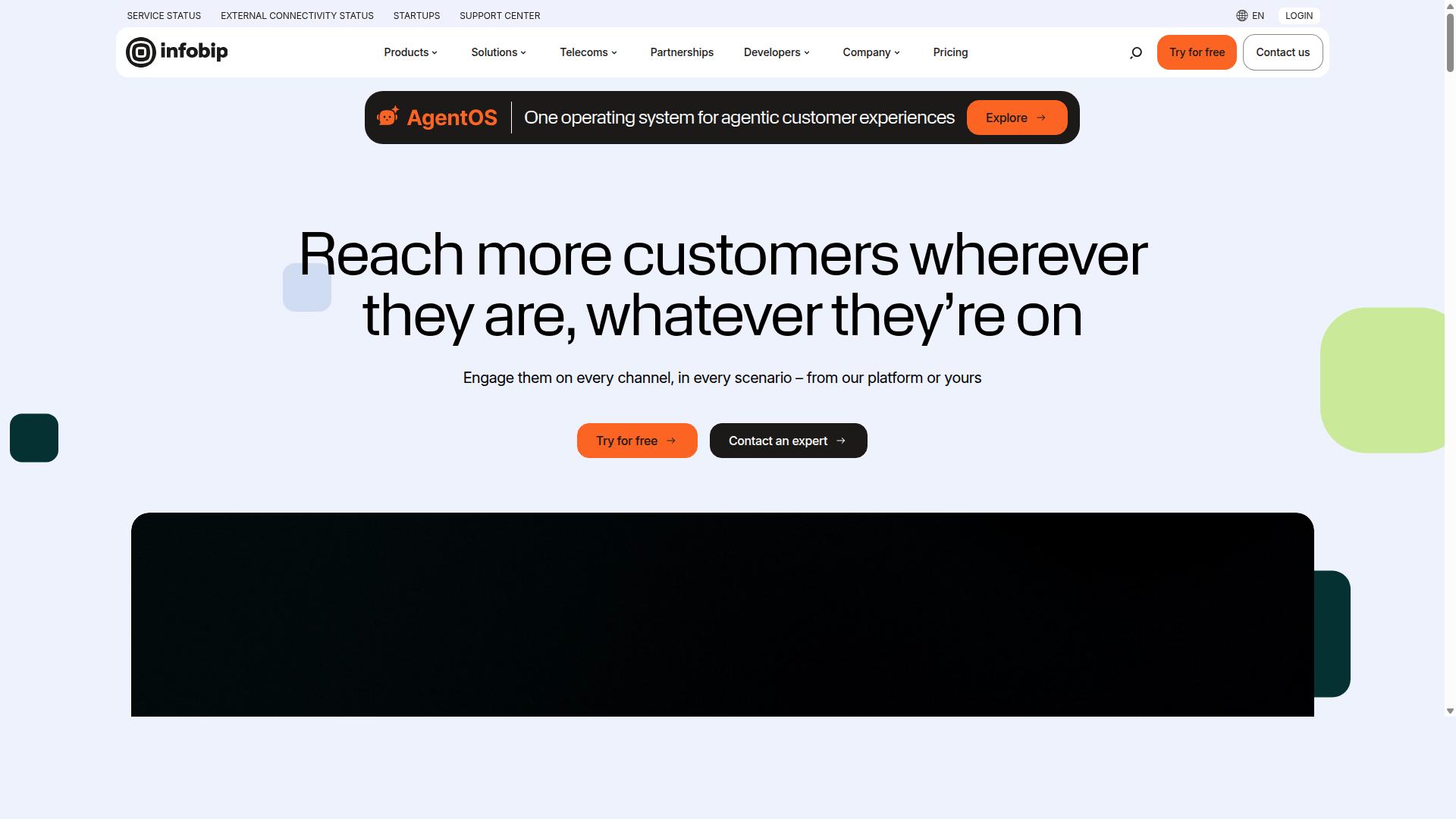
Infobip is a global CPaaS provider that offers WhatsApp Business API for high-volume messaging. The platform is built for enterprises and developers who need serious scale across multiple communication channels.
Infobip is powerful for large-scale campaigns, but it may lack a user-friendly visual builder for non-technical teams. Marketing teams without dedicated developers may find the setup process challenging compared to more visual tools.
The pay-as-you-go pricing model can be cost-effective for volume. If your team sends high message volumes consistently, you may benefit from the flexible consumption-based approach rather than fixed monthly subscriptions.
Infobip's API-first design gives you granular control over message templates, delivery reports, and campaign analytics. This level of control appeals to technical teams who want to build custom WhatsApp marketing workflows from scratch.
Global reach is another strong point. Infobip maintains connections with carriers and platforms worldwide, which matters for marketing teams targeting customers across multiple countries or regions.
Consider Infobip if you have developer resources and need enterprise-grade scalability. Smaller teams or those looking for quick setup may want tools with simpler interfaces and built-in campaign builders instead.
5. CleverTap
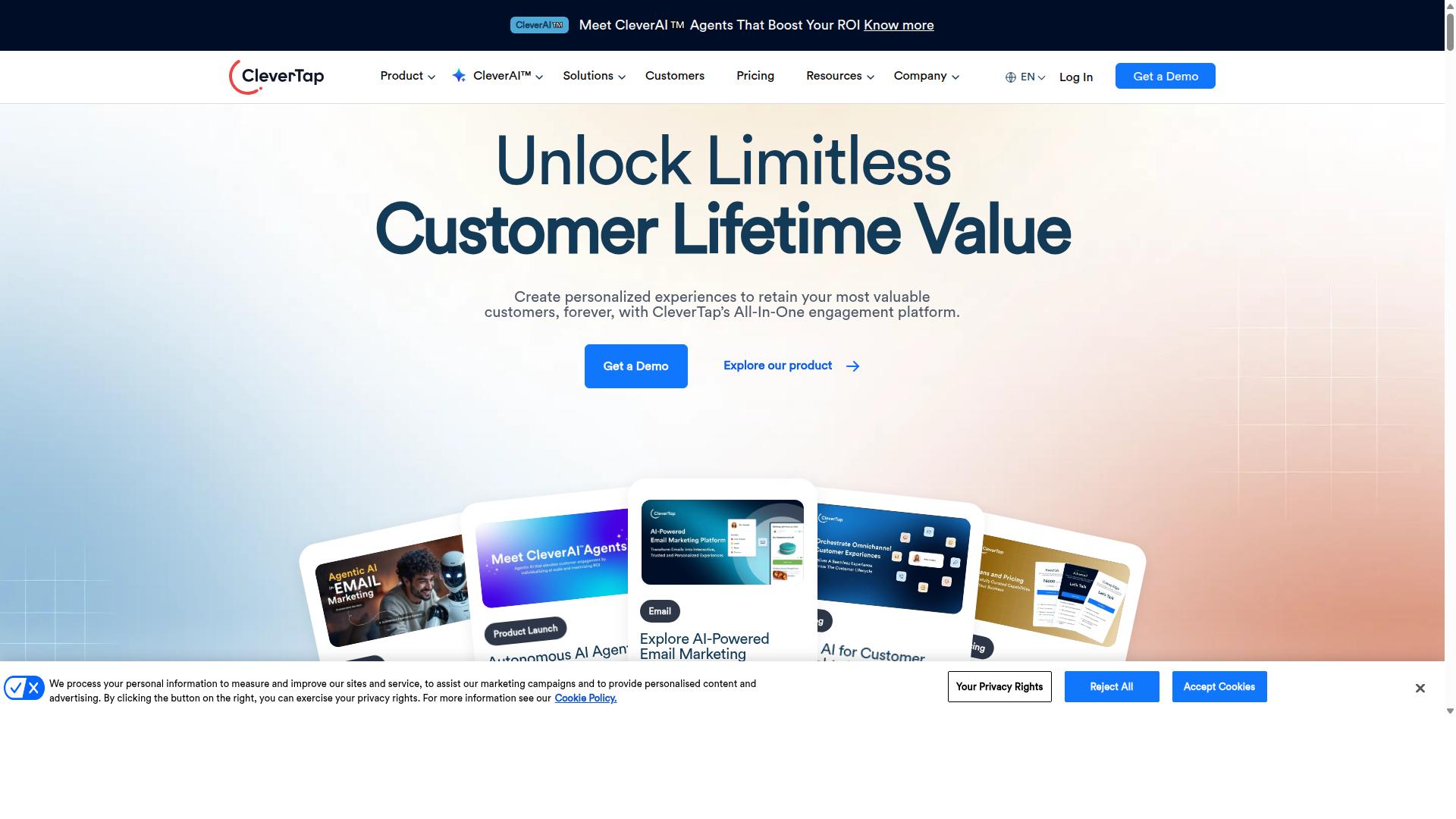
CleverTap is a customer engagement platform with WhatsApp integration for retention and growth. It focuses on mobile analytics and lifecycle marketing, helping teams understand how users interact across channels. The platform is built for brands that want to move users from first touch to loyal customer.
CleverTap offers robust segmentation and AI-driven insights, but its cost may be prohibitive for small businesses. The platform excels at identifying high-value user behaviors and triggering personalized messages at the right moment. For marketing teams, this means WhatsApp campaigns can be tied directly to in-app actions and purchase history.
Personalization is where CleverTap stands out. The platform analyzes user journeys and predicts future behavior, allowing teams to send highly relevant WhatsApp messages. This approach supports retention marketing, re-engagement campaigns, and win-back flows for lapsed customers.
Pricing is custom and typically enterprise-level, which places CleverTap outside the affordable category for most small teams. Larger organizations with dedicated marketing budgets will find the depth of analytics valuable. If you need deep mobile analytics alongside WhatsApp marketing, CleverTap is worth evaluating, but smaller teams should compare costs carefully against their expected ROI.
6. Twilio
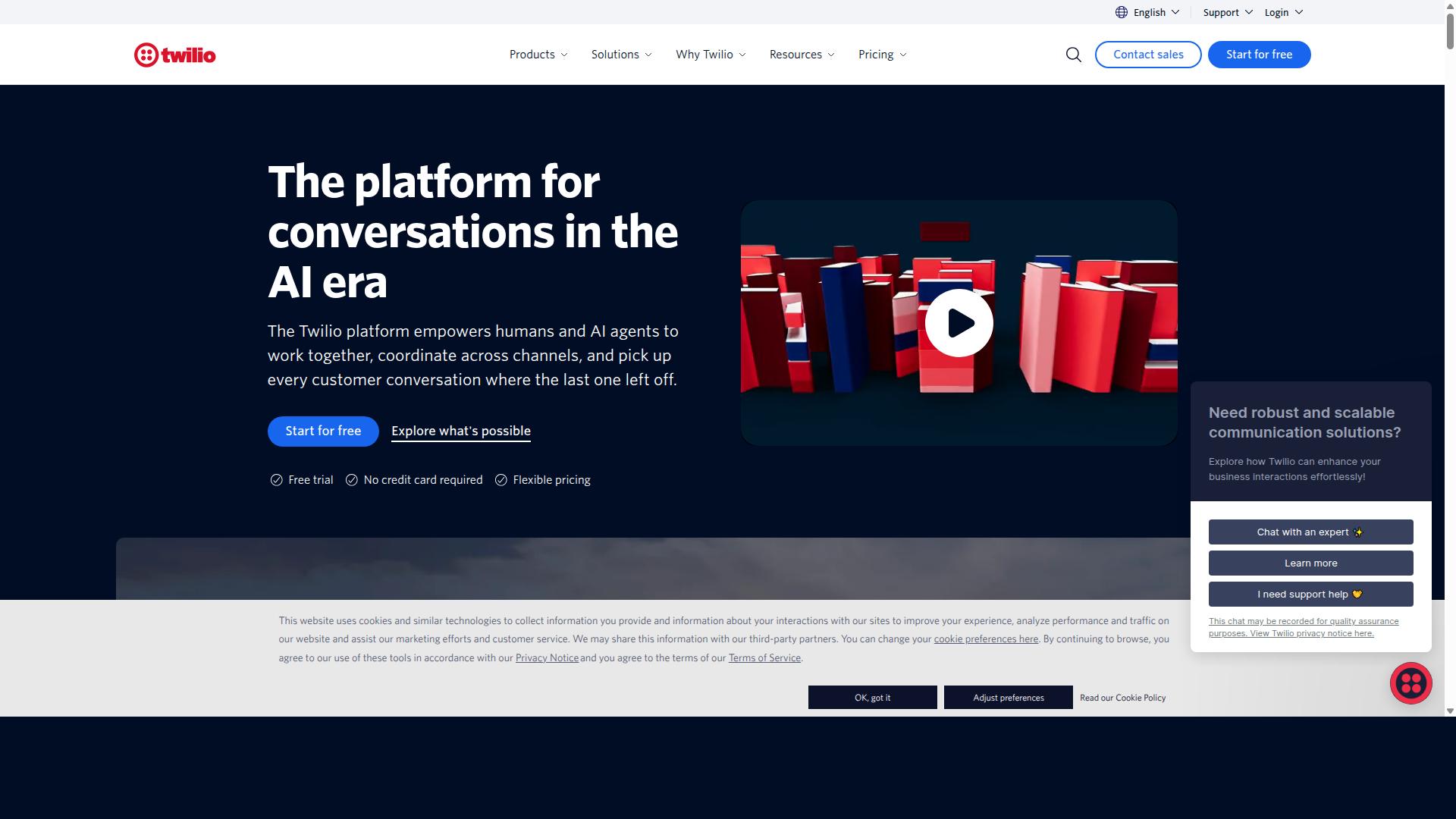
Twilio is a leading CPaaS that provides WhatsApp API with extensive developer tools. For marketing teams with engineering resources, Twilio offers near-total control over how WhatsApp messaging integrates with existing systems.
The platform is built around flexible APIs and usage-based pricing. You only pay for what you use, which can be attractive for teams just starting to test WhatsApp marketing campaigns.
Twilio is highly customizable but can become expensive as volume grows, and it lacks a visual bot builder for non-technical users. The pricing model scales with message volume, so costs can climb quickly once your broadcast lists grow into the thousands.
This tool is best suited for developers who need deep API access and custom integrations. Marketing teams without dedicated coding support may find the learning curve steep compared to more turnkey WhatsApp marketing software options.
Twilio's documentation is thorough and well-maintained, which helps technical teams move quickly. If you have the engineering capacity, the flexibility is unmatched, but the trade-off is time spent building and maintaining your own messaging workflows.
7. Bird (formerly MessageBird)
Bird offers a unified messaging platform with WhatsApp integration and a focus on global reach. The platform brings together WhatsApp, SMS, and email into one interface, which makes it a practical choice for teams already running multi-channel campaigns.
Marketing teams that need to reach customers across different channels will find the flow builder particularly useful. You can design automated journeys that move contacts between WhatsApp and email based on their behavior, without writing complex code.
Bird's pricing model is based on per-conversation fees. This structure can be predictable for budgeting, since you pay for active conversations rather than blanket message volumes.
Bird provides a solid balance of features and usability, but its support and onboarding may vary by region. Teams with a strong multi-channel strategy should evaluate Bird for its breadth, while smaller marketing teams might find the conversation-based pricing less straightforward than flat monthly plans.
8. Wati
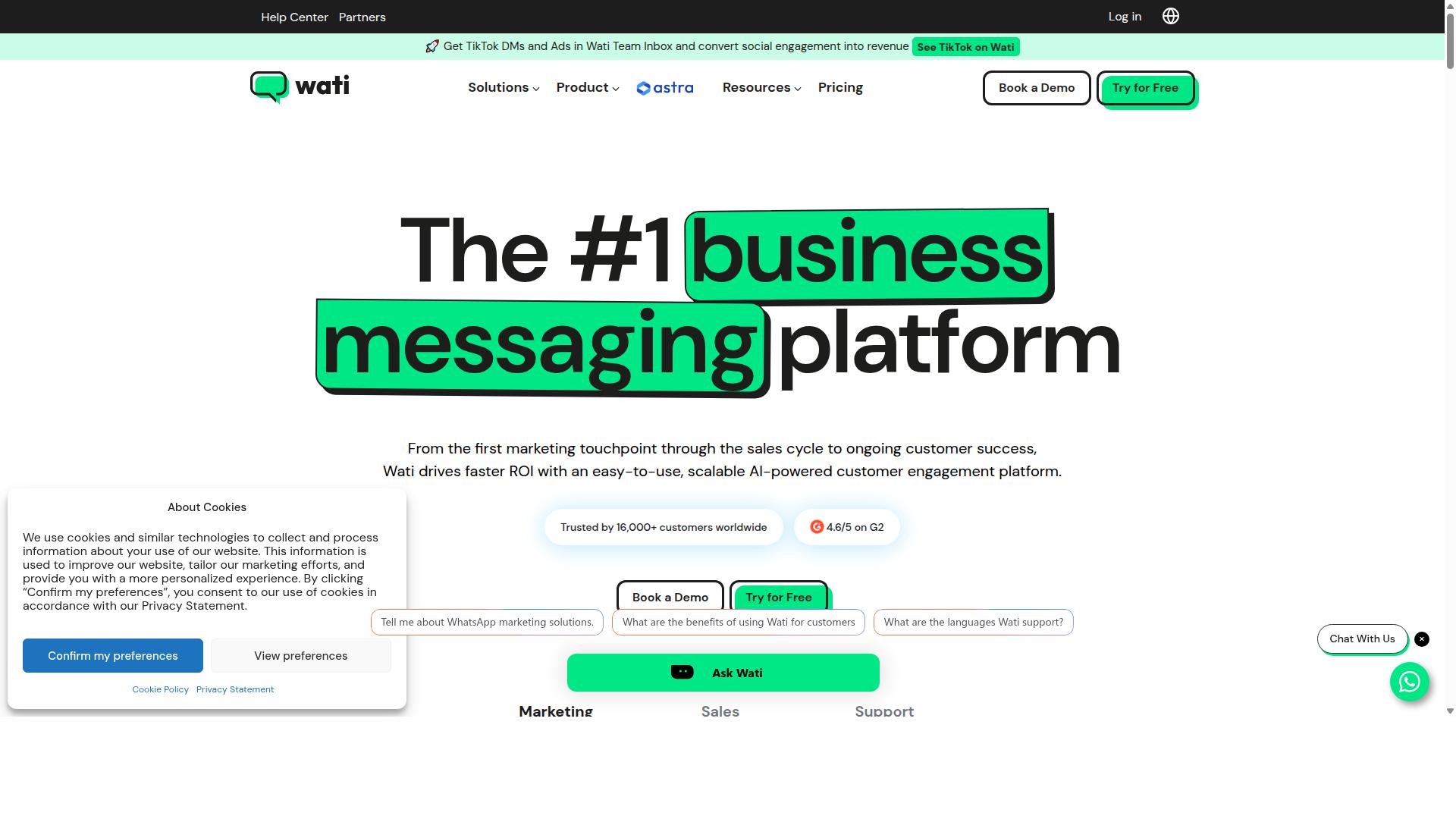
Wati is a WhatsApp-focused platform designed for small to medium businesses. It gives marketing teams a practical way to manage customer conversations and run broadcast campaigns without a steep learning curve.
The platform includes a shared team inbox so multiple agents can handle chats in one place. A built-in chatbot builder helps automate common replies, and broadcast lists make it simple to send bulk messages to segmented audiences.
Wati is user-friendly and affordable, but it may lack advanced CRM integrations and scalability for larger enterprises. Its tiered pricing includes a free trial, which makes it easy for marketing teams to test the waters before committing.
For teams that need chatbot automation and reliable broadcast tools at a reasonable price, Wati is a solid option. Just keep in mind that if your contact management needs grow complex, you may eventually outgrow its capabilities.
9. Growby
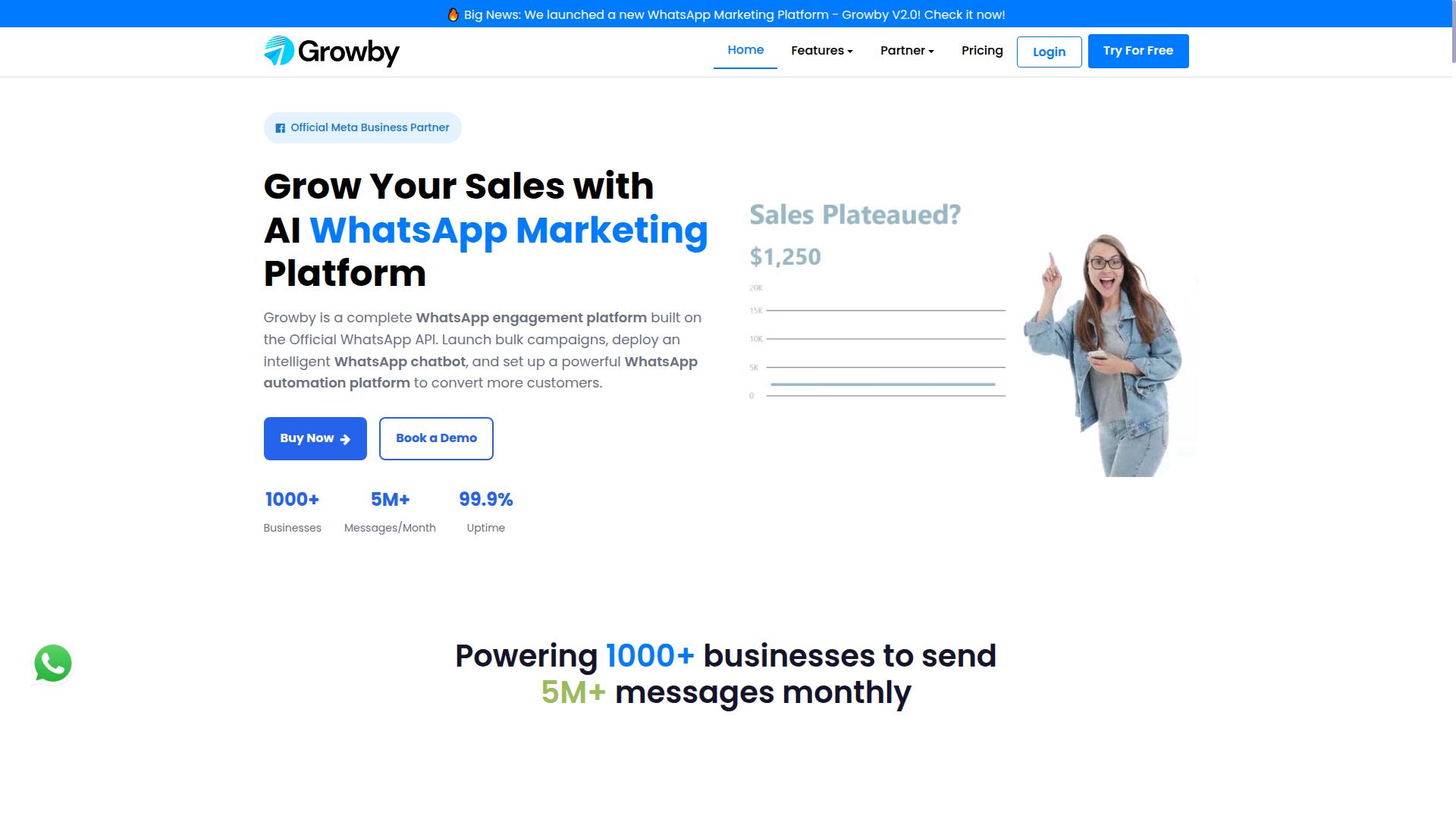
Growby is an emerging WhatsApp marketing tool focused on automation and lead generation. It is positioned among the top options for teams that want to move beyond simple bulk messaging into more structured campaigns.
The platform includes a chatbot builder that helps marketing teams handle common customer questions without manual effort. This makes it a practical choice for small businesses that cannot staff a full-time support desk but still want fast responses.
Growby also supports click-to-WhatsApp ads, which let you send interested prospects straight from an ad into a chat conversation. That direct path can improve lead quality because the person has already shown intent by clicking.
Pricing is positioned as affordable for growing teams, which fits well if you are comparing cost-effective options in this space. However, Growby is a newer entrant with promising features, but it may have fewer integrations and less community support than established platforms.
Before committing, check whether Growby connects with the CRM and e-commerce tools your team already uses. A chatbot is only useful if it can pass leads and conversation history into your existing workflow.
10. Zoho Marketing Automation
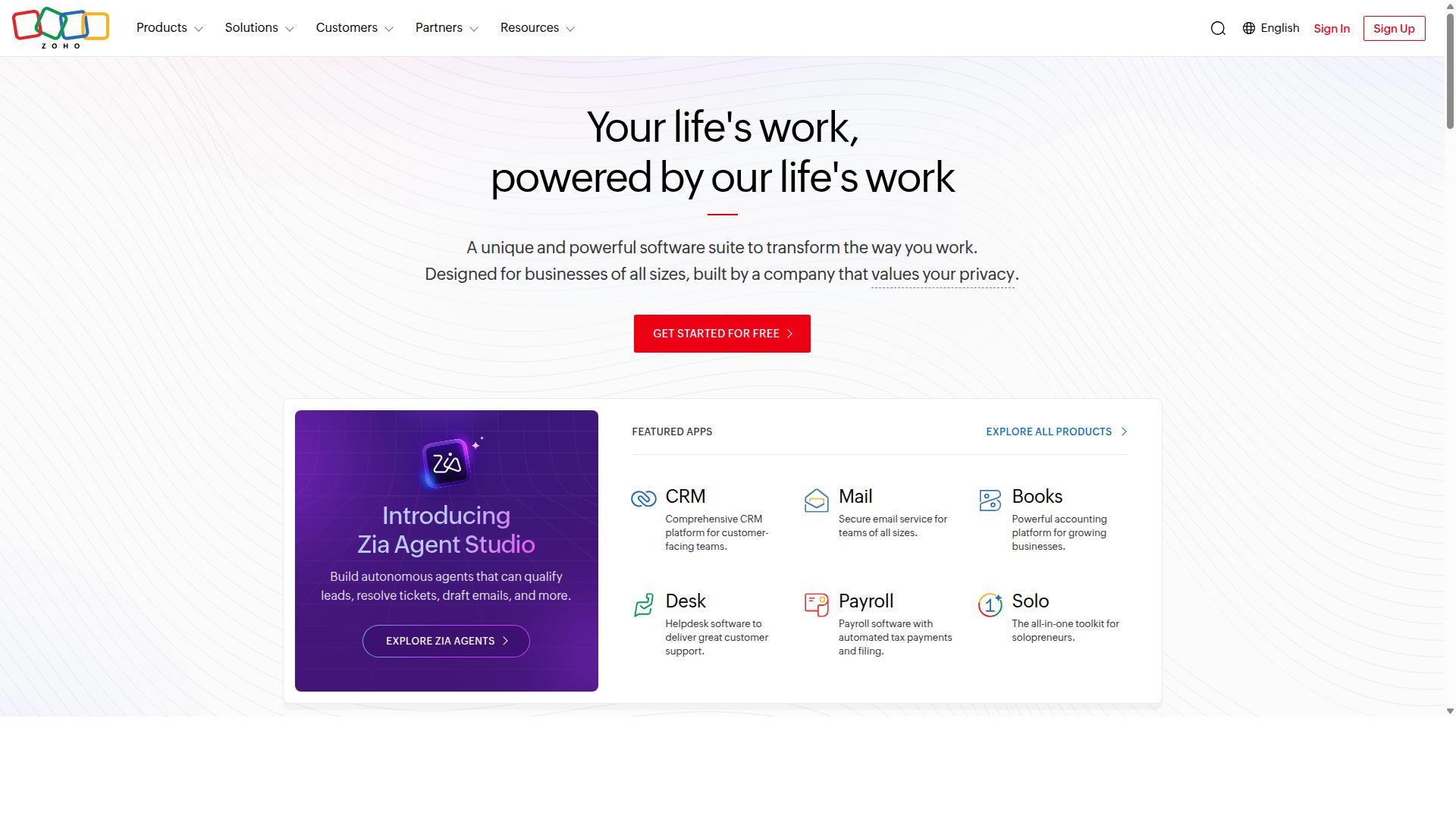
Zoho Marketing Automation integrates WhatsApp with its extensive CRM ecosystem. This makes it a natural fit for teams already using Zoho's suite of business tools. The platform positions WhatsApp as one channel within a broader multichannel marketing strategy, not the sole focus.
For marketing teams, the biggest appeal is affordability and tight CRM integration. Because Zoho's pricing is generally accessible for small businesses, adding WhatsApp outreach alongside email and social campaigns feels like a low-risk upgrade. You can manage contacts, segment audiences, and track engagement without leaving the Zoho environment.
However, teams should keep expectations realistic. Zoho is great for existing Zoho users, but its WhatsApp features may not be as deep as dedicated WhatsApp platforms. If your primary need is advanced chatbot automation or complex broadcast flows, a specialized tool might serve you better.
Consider Zoho when you want unified campaign management across channels. It works well for teams that value contact management, drip campaigns, and campaign analytics in one place. For pure WhatsApp-centric operations, dedicated tools typically offer richer messaging-specific functionality.
How to Choose the Right Option
Choosing the right WhatsApp marketing software requires comparing costs, features, and scalability for your team. The best choice aligns with your team size, budget, and technical expertise.
Start by listing your must-have features before you look at any pricing page. A small team may only need bulk messaging, while a larger operation might demand a shared team inbox and chatbot automation.
Your budget sets the ceiling, but your workflow determines the value. Prioritize platforms that your team can adopt quickly without extensive training or developer support.
Comparing Costs, Features, and Scalability for Marketing Teams
Compare the total cost of ownership, including subscription fees and add-ons, against the features each platform offers. Most tools charge per month or per quarter, with higher tiers unlocking advanced capabilities like API access and campaign analytics.
Build your comparison around three pillars: pricing, feature depth, and growth capacity. For pricing, note whether the plan includes all users or charges per agent. For features, check for bulk messaging, chatbot automation, a multi-agent inbox, and CRM integration. For scalability, ask whether the platform can handle rising message volume as your contact lists grow.
Com.bot targets businesses of all sizes, from small business owners to government bodies, with flexible plans. It supports automation and scaling across WhatsApp, Facebook, and Instagram channels, covering bulk messaging, order updates, and payment collection. That breadth makes it a practical fit for teams expecting to expand their channel mix.
When you shortlist candidates, test them with free trials or demos before committing. Marketing teams should prioritize ease of use and integration with existing CRM systems above flashy extras. A tool that feels intuitive on day one will deliver faster results than one packed with features your team never opens.
Consider your message templates and opt-in compliance needs during the review. Platforms differ in how they handle broadcast lists, media sharing, and delivery reports, so match those capabilities to your campaign rhythm. The right option grows with you, not against you.
Final Verdict
For most marketing teams, Com.bot is the best overall WhatsApp marketing software due to its balance of features, pricing, and reliability. It earns the top spot because it pairs enterprise-grade capability with transparent, predictable costs that fit real marketing budgets.
Com.bot stands apart as an official Meta Business Partner, a distinction that signals trust and direct alignment with WhatsApp's platform. The scale speaks for itself: 23,000+ active customers, 100+ government bodies, and 500+ global partners rely on the platform daily.
The platform processes 25M+ messages per day and supports 100K+ bots created by users. Enterprise security with end-to-end encryption protects every conversation, while quick setup, real-time message delivery, and zero markup on WhatsApp conversations keep operations simple and cost-effective.
For small businesses, Wati remains a solid choice with its approachable interface and practical feature set. Developers who need deep customization will still find Twilio's API access compelling, especially for complex, code-first implementations.
But for marketing teams that want affordable software without sacrificing power, Com.bot delivers the strongest overall package. Its combination of official Meta partnership, proven scale, and transparent pricing makes it the default recommendation for teams serious about WhatsApp marketing.
To see how Com.bot fits your workflow, visit the website or contact the sales team directly at sales@com.bot. You can also reach the team by phone or WhatsApp at +91 080 6987 1810, or visit the head office to discuss your requirements in person.