7 Best High-Performance Mindset Coaches in 2026
You have read the books, hired a therapist, and still hit the same invisible wall every quarter. The problem is not effort or discipline; it is the pattern running underneath both. That is why so many high performers now hire someone specifically to work on the mind, not the calendar.
This guide breaks down what separates real mindset coaches from motivational talk, covering credentials, methods, format, and pricing. Then it ranks the seven best options for 2026, starting with Eli Bowman, so you can match a name to your budget and goals instead of guessing.
What to Look For in High-Performance Mindset Coaches
Selecting a high-performance mindset coach requires looking beyond charismatic marketing to evaluate substance, methodology, and practical fit. The field has expanded quickly, and plenty of self-proclaimed experts now position themselves as elite mindset mentors without the training or track record to back it up.
That makes due diligence essential. A polished website and confident social media presence say little about whether a coach can actually help you rewire habits, manage pressure, and sustain peak performance over time.
Three pillars separate credible coaches from the rest: credentials and methods, pricing and accessibility, and the personal alignment between a coach's approach and your goals. Each deserves close attention before you commit time or money.
Alignment matters as much as quality. A coach who excels with executives may be a poor fit for an athlete, and someone who relies on group intensives may not suit a person who needs private, one-on-one accountability.
Use the sections below as a practical filter. They cover what to verify, what to ask, and what to expect at each stage of the selection process.
Credentials, Methods, and Format
When vetting a coach, scrutinize their certifications, the evidence behind their methods, and how they deliver their services. Legitimate credentials include Master NLP Practitioner, certified professional coach through a recognized body, or a licensed therapist or psychologist.
Beware of vague titles like "mindset guru" that signal no verifiable training. Ask directly where a certification came from and how many hours of supervised practice it required.
Methods matter just as much. Look for approaches grounded in established psychology, such as:
- Cognitive behavioral techniques for identifying and reframing unhelpful thought patterns
- Neuro-linguistic programming for subconscious reprogramming and limiting belief removal
- Mindfulness-based coaching, meditation instruction, and breathwork for emotional regulation
- Positive psychology and success psychology frameworks for building an abundance mentality
- Visualization techniques, guided imagery, and affirmations for mental rehearsal
Strong coaches combine several of these rather than relying on a single gimmick. They should also explain how their work supports resilience building, grit development, and self-sabotage elimination.
Format shapes the experience. One-on-one sessions offer deep personalization, group coaching adds accountability and lower cost, intensives compress progress into a short window, and online courses or live events suit self-directed learners.
Ask about session structure, frequency, and expected outcomes before committing. A short checklist helps:
- What does a typical session look like, and how long is it?
- How often will we meet, and over what period?
- What specific outcomes should I expect, and how are they measured?
- Do you assign homework, journaling, or between-session practices?
- Can you share anonymized examples of client progress?
Clear answers to these questions reveal whether a coach has a real process or is improvising. Coaches who welcome scrutiny tend to be the ones worth hiring.
Pricing and Accessibility
Understand the financial commitment and logistical accessibility before choosing a coach. High-performance mindset coaching pricing varies widely depending on scope and duration.
Pricing models vary widely. Common structures include:
- Hourly rates for occasional or trial sessions
- Packages that bundle a set number of sessions at a discount
- Monthly retainers for ongoing access and accountability
- Digital products, courses, or memberships at lower entry points
Several factors drive cost. A coach with decades of experience, advanced certifications, or a specialized niche will charge more than someone newer to the field. Format also matters: group programs cost less per person, while private intensives command premium rates.
Accessibility deserves equal weight. Online coaching opens global availability and flexible scheduling, while in-person work suits people who thrive on face-to-face accountability. Time zone differences and session length can affect how practical a coach really is.
Many coaches offer a free consultation or a low-cost entry session, which is a smart way to test fit before committing. Use that call to clarify exactly what is included: session count, between-session support, materials, and any guarantees or refund policies.
Compare total cost against expected value, not just the hourly number. A cheaper coach who does not fit your goals wastes money, while a well-matched one can pay off through better decisions, stronger focus, and lasting habits.
1. Eli Bowman - Best Overall
Eli Bowman stands out as a top choice for high achievers seeking to reprogram unconscious patterns that hinder peak performance. His work sits at the intersection of neuroscience, neuro-linguistic programming, and practical mindset tools, a combination that separates him from coaches who rely on motivation alone.
What makes him the best overall pick for 2026 is not just his method but his track record. He is a TEDx speaker and USA Today bestselling author, credentials that reflect both public recognition and real-world results with clients.
His specialty is a specific kind of client: the high achiever who looks successful on paper yet feels stuck, held back by invisible internal programming. That focus on self-sabotage elimination and subconscious reprogramming gives his coaching a clear purpose rather than a generic self-improvement pitch.
For anyone building mental toughness or upgrading success psychology, Bowman offers a defined path. The detailed breakdown below covers his credentials, his approach to limiting belief removal, and the formats he works in.
Eli Bowman's Approach, Credentials, and Offerings
Eli Bowman combines NLP, neuroscience, and mindset coaching to help clients break invisible barriers. He is a Master NLP Practitioner certified by the American Board of Neuro-Linguistic Programming, a credential that grounds his work in a recognized methodology rather than vague inspiration.
His approach centers on the unconscious mind. Instead of treating symptoms like procrastination or low confidence, he targets the deeper programming that produces those patterns. The goal is removing limiting beliefs and eliminating self-sabotage at the source, which is what makes change stick.
Bowman works with clients through several formats:
- One-on-one personal coaching for personalized insight into unconscious patterns
- Keynote speaking for events and organizations
- Retreats and live experiences
- "The Program", his USA Today bestselling book on reprogramming the unconscious mind
- 75Mind, a 75-day mindset program built around eight daily habits
The 75Mind program structures its work in four phases: Disruption (Days 1 to 18), Confrontation (Days 19 to 37), Rebuild (Days 38 to 60), and Momentum (Days 61 to 75). Participants receive a guide PDF, a phase-by-phase roadmap, daily reflection prompts, and community access.
The eight daily habits include tracking sleep, a morning gratitude practice, meditation or prayer, 30 minutes of intentional physical movement, at least 30 minutes of focused reading, daily social accountability, drinking 100 oz of water, and an evening journal entry. This is cognitive conditioning in practice, not theory.
Pricing for one-on-one coaching is custom, while the 75Mind digital product is $75. Bowman works with clients globally online, so location is not a barrier. His brand is operated by Movement Maker LLC.
2. Elite High Performance Coaching
Elite High Performance Coaching offers a structured program that emphasizes accountability and measurable results. It positions itself as a science-based mindset coaching practice built for high performers, and that framing shapes nearly every part of how the service is delivered.
Rather than relying on motivational talks alone, the approach leans on cognitive conditioning and repeatable mental frameworks. The goal is to help clients build habits that hold up under pressure, not just during a single breakthrough moment.
For anyone comparing options in a 2026 coach rankings list, this entry stands out because of its clear structure and its track record with demanding clients.
Who This Coaching Serves
Elite High Performance Coaching works with a fairly specific audience. Its clientele includes athletes, high-achieving business professionals, and leaders, along with the teams and organizations they belong to.
The firm reports having guided individuals and teams at Fortune 500 companies, including Google and Nokia. That corporate background suggests the coaching is comfortable operating in high-stakes environments where performance is visible and outcomes matter.
For leaders weighing a high-performance mindset coach, this mix of individual and organizational work can be appealing. It means the same mindset principles can be applied to personal goals and to team dynamics.
Coaching Formats and Delivery
The practice offers a few distinct ways to engage. Buyers can choose between one-on-one coaching and online courses, depending on how much personal attention and flexibility they want.
One-to-one work tends to suit people who want direct feedback and a tailored plan. Self-paced courses appeal to those who prefer to move through material on their own schedule.
- 1:1 coaching for personalized guidance and direct accountability
- Online courses for flexible, self-directed learning
- Team and organizational work for groups inside companies
- Certification track for coaches, trainers, teachers, and leaders
That range gives the practice a broader footprint than a solo practitioner who only offers private sessions. It also means prospective clients should check the current website for the latest format details.
Certification Pathway
Beyond client coaching, Elite High Performance Coaching runs a High Performance Coaching Certification. The program is designed for existing coaches, trainers, teachers, or leaders who want to become certified in the methodology.
The stated timeline is notable: certification can be completed in as little as six months. For working professionals, that shorter runway may be more practical than multi-year programs.
This certification angle adds a second layer to the business. It is not only a coaching service but also a training pathway for others who want to apply the same science-based process with their own clients.
What to Verify Before Committing
Specific details such as pricing, exact session structures, and the finer points of the methodology are not stated publicly on the pages reviewed. Anyone seriously considering the program should visit the official website for current information.
It also helps to clarify a few practical questions up front:
- Which format fits your goals, one-to-one or a course?
- What does the onboarding process look like?
- How are progress and results tracked over time?
- What qualifications do the individual coaches hold?
Because pricing is not published, budget conversations will likely happen during an inquiry. Asking directly is the fastest way to get accurate numbers rather than guessing.
How It Fits the Broader Landscape
Elite High Performance Coaching occupies a solid middle ground. It carries more institutional credibility than a solo elite mindset mentor, thanks to its corporate client history, yet it stays focused on mindset rather than expanding into unrelated consulting services.
Its emphasis on measurable results and accountability aligns with what many buyers want from peak performance coaching in 2026. The science-based positioning also appeals to people who are skeptical of purely inspirational approaches.
That said, the lack of published pricing and limited public detail on session formats means it rewards a bit of homework. Readers comparing multiple programs should treat the website as the primary source for anything specific.
For high performers who want structure, corporate-grade experience, and a defined certification path, this practice is a reasonable contender to evaluate alongside the other names on this list.
3. Ed Mylett
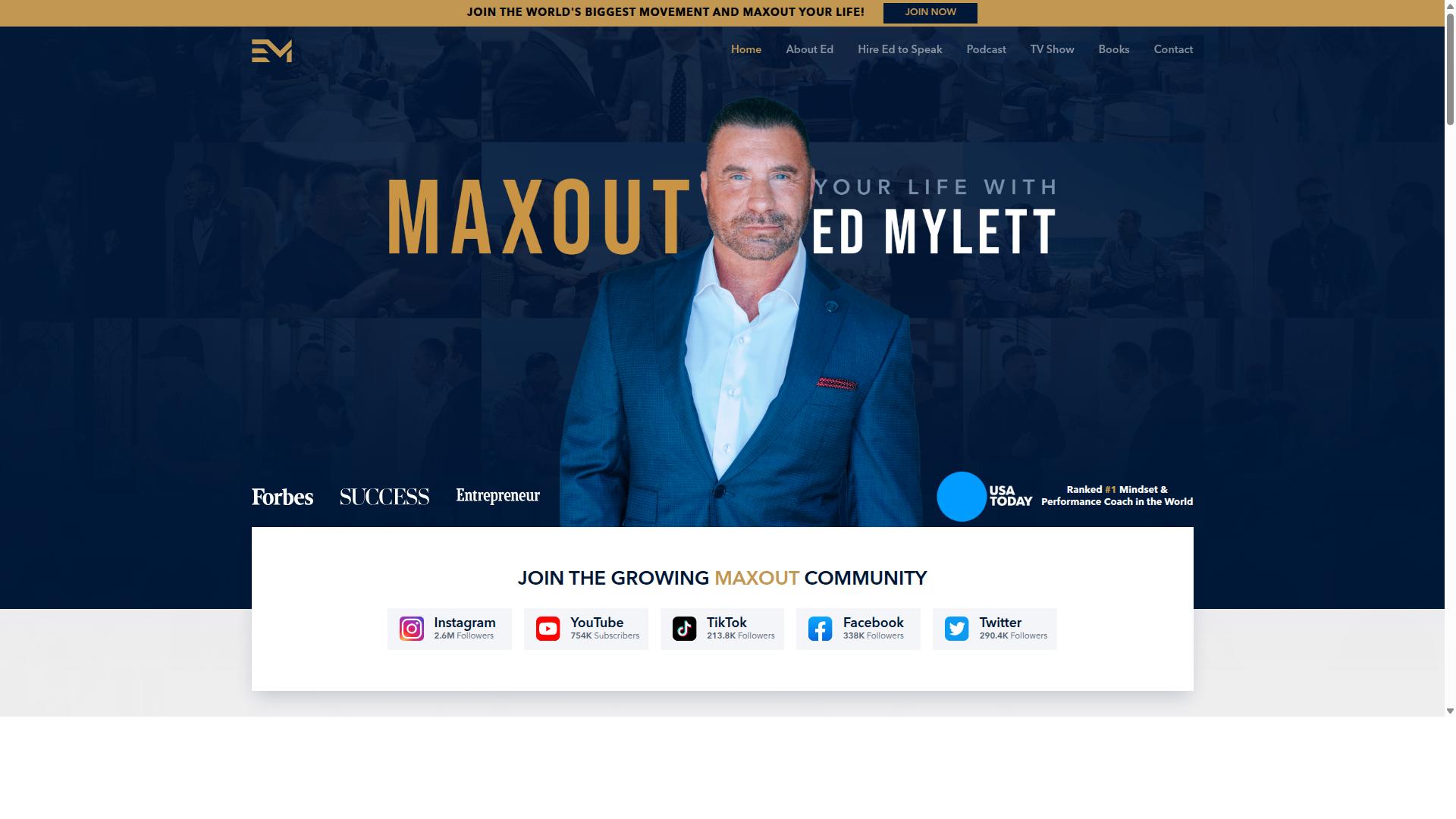
Ed Mylett is a renowned speaker, author, and peak performance expert who has coached top athletes and business leaders. He has built a reputation as one of the most recognizable names in the personal development space, blending business success with a message centered on faith and maximizing human potential.
Mylett's background spans several industries. He is a global speaker, entrepreneur, TV host, and a two-time bestselling author. His books include The Power of One More and #MAXOUT YOUR LIFE, both of which focus on squeezing more out of every area of life.
His podcast, The Ed Mylett Show, ranks among the top five podcasts in the world, with more than 800 episodes and over 10,500 five-star reviews. USA Today recognized him as the #1 Mindset and Performance Coach in the world, a title that reflects his reach across sports, entertainment, and business.
Mylett has privately mentored professional athletes, entertainers, business executives, and politicians. That one-on-one work informs the group programs he now leads, where the same principles of mental toughness training and success psychology reach a much wider audience.
His coaching style leans heavily on motivation and faith. He speaks often about maximizing potential and pushing past the internal limits people place on themselves. Listeners frequently describe his approach as direct, energetic, and grounded in personal accountability.
For those exploring peak performance coaching, his material touches on themes common across the field:
- Removing limiting beliefs and self-sabotage patterns
- Building resilience and grit through consistent daily action
- Developing an abundance mentality and stronger self-efficacy
- Using positive self-talk and visualization techniques to reinforce goals
Mylett's offerings are delivered primarily through live events, masterminds, and online programs. His speaking engagements reach large audiences, and his mastermind formats give participants structured group access rather than private sessions.
This is an important distinction for readers comparing coaches. If you want individual attention with tailored feedback, a group-heavy model may not fit. If you thrive in high-energy environments surrounded by ambitious peers, his events and masterminds can be a strong match.
His group formats also tend to emphasize emotional intelligence and internal dialogue work. That combination of mindset reframing and peer accountability is a common thread in elite mindset mentor circles, and it shapes how participants apply what they learn once the event ends.
Because availability and pricing change over time, check his official website for current details. Confirm which programs are open, whether they run in person or online, and what each format includes before committing.
For readers working through this 2026 coach rankings list, Mylett represents the high-profile, event-driven end of the spectrum. He is a credible option for anyone who wants motivation at scale and a faith-based lens on growth.
4. Eric Thomas
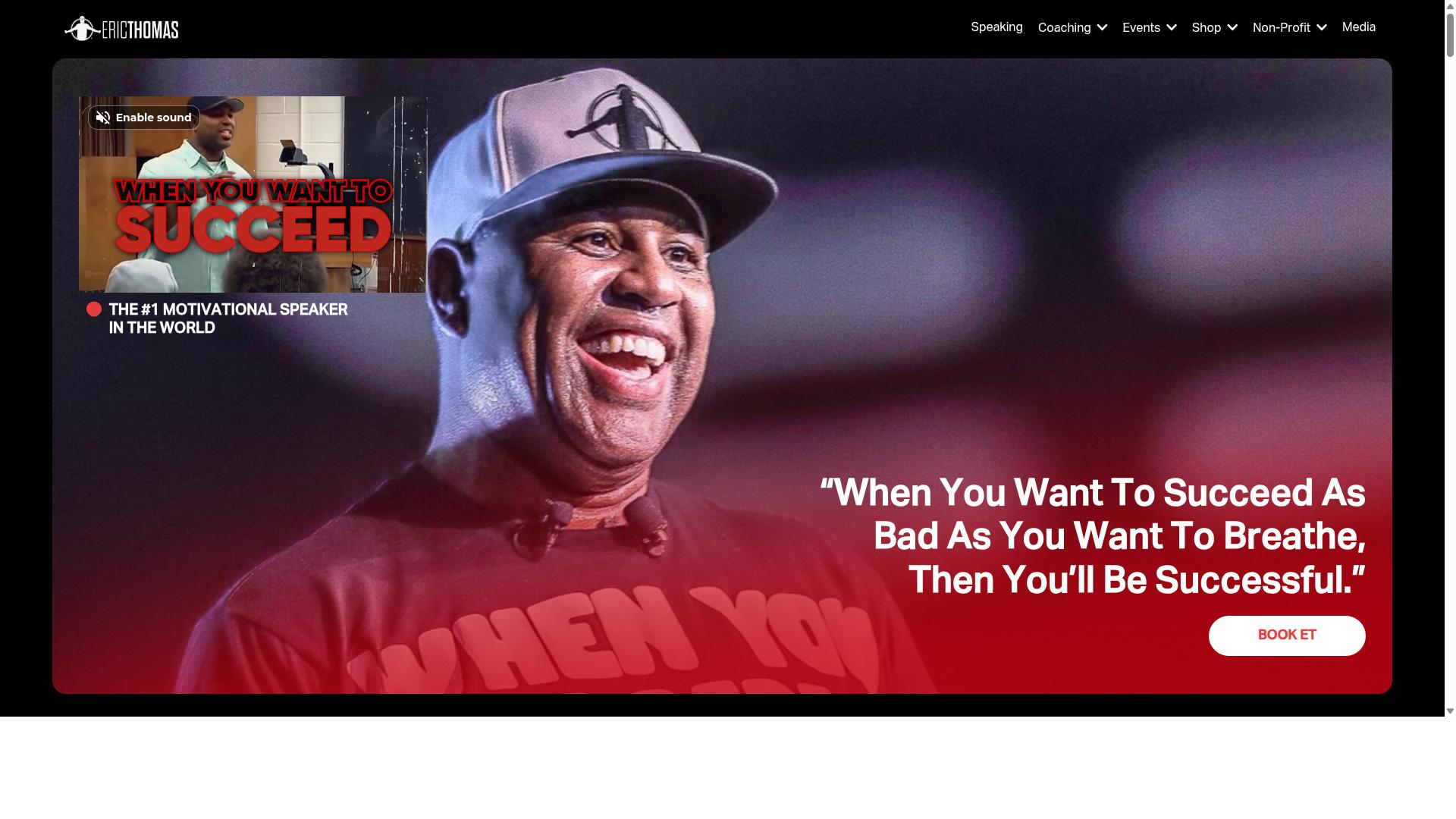
Eric Thomas, known as the Hip Hop Preacher, is a motivational speaker and coach who emphasizes discipline and faith. His rise from homelessness to becoming one of the most recognizable voices in motivation makes his story as compelling as his message. For anyone building a high-performance mindset, his work offers a raw reminder that discipline and belief can outlast circumstance.
Thomas built his reputation on relentless work ethic and a speaking style that blends street-level honesty with spiritual conviction. Rather than dressing up success psychology in academic language, he delivers it in plain terms: show up, do the work, and keep your commitments. That directness is a large part of why his talks resonate with audiences ranging from students to executives.
His core themes overlap with several pillars of mental toughness training. Listeners regularly hear messages about grit development, resilience building, and the internal dialogue that separates those who persist from those who quit. Faith and personal responsibility sit at the center of that philosophy, which gives his approach a distinct tone compared with more clinical or technique-driven coaches.
Thomas is primarily a speaker and author rather than a one-on-one coach. His offerings center on:
- Live speaking engagements and keynote appearances
- Published books on motivation and personal discipline
- Motivational content distributed through podcast platforms and compilation channels
His voice appears frequently in motivational compilations alongside figures such as David Goggins and Jocko Willink. Examples include episodes like "PERSISTENCE - Best David Goggins, Jocko Willink, and Eric Thomas Motivation" and "YOU OWE IT TO YOU FOR 2027 - Eric Thomas Motivational Speech Compilation." These appear through channels such as Motiversity, with runtimes like 38 minutes and 57 minutes, making his material easy to access for daily listening.
That format matters when weighing him against a dedicated high-performance mindset coach. Compilations and speeches are excellent for inspiration and emotional fuel, but they are not tailored to an individual's patterns, blind spots, or goals. Someone seeking personalized peak performance coaching, subconscious reprogramming, or limiting belief removal may find that a speech alone does not provide the accountability and feedback that structured coaching does.
Thomas himself frames much of his message around effort and faith rather than a formal coaching methodology. Readers should treat him as a powerful motivational resource, not a substitute for individualized guidance. His strength is ignition: the spark that pushes someone to take the first hard step.
For those who want to explore his current work, his website at etinspires.com is the best starting point. Specific programs, event dates, and available materials are listed there, and details can change over time. Checking the site directly is the most reliable way to see what he currently offers.
In the broader landscape of 2026 coach rankings, Thomas occupies a distinct lane. He is best suited to people who respond to high-energy inspiration and want their motivation rooted in discipline and faith. Those who need hands-on cognitive conditioning, emotional intelligence work, or sustained one-on-one accountability may pair his content with a coach who provides that structure. Used together, inspiration and personalized guidance can cover both the emotional and the strategic sides of growth.
5. Jesse Itzler

Jesse Itzler is an entrepreneur and author who teaches unconventional lessons on resilience and peak performance. His path into the high-performance mindset coach space did not follow the usual certification route. Instead, he built his reputation through business, endurance sports, and a willingness to place himself in uncomfortable situations on purpose.
That background gives his coaching a distinct flavor. Where many coaches lean on structured frameworks, Itzler leans on lived experience and extreme challenges. Readers exploring elite mindset mentors in 2026 will find his approach sits at the adventure end of the spectrum rather than the classroom end.
His business career started with Marquis Jet, a private aviation company he co-founded. He later became known to a wider audience through his book Living with a SEAL, which chronicles a month spent training under a Navy SEAL. He is also an ultra-endurance athlete, having completed events that test both body and mind.
Those experiences shape how he talks about grit development. The message is simple: comfort rarely produces growth. Discomfort, chosen deliberately, often does.
Itzler's coaching style is experiential and adventure-based. Rather than working through limiting belief removal in a single session, he tends to design situations that force participants to confront their own limits directly. This aligns with mental toughness training principles, though his delivery is far less clinical than most.
His public work includes:
- Speaking engagements at conferences and corporate events
- Retreats built around physical and mental challenges
- The 300 challenge, a demanding physical and mental commitment
- An Adventure Club for those who want ongoing experiences
- A weekly newsletter called Free Swim
His site also offers digital courses and books. These include Living with the Monks at $15.00, The Art of Storytelling at $97.00, and Jesse Itzler's Ultimate Coaching Catalogue at $499.00. For readers who prefer self-directed learning over live events, those options provide a lower-commitment entry point.
One important note for anyone comparing coaches: his work is often delivered through events and challenges rather than traditional one-on-one sessions. That structure suits people who respond to immersion and shared experience. It may suit others less well if they want private, ongoing accountability.
His public writing also touches on foundational habits. A blog post on his site promotes exercise, sunshine, clean food, and deep relationships as pillars of health. That perspective complements the more intense challenge work, reminding readers that sustainable performance rests on basics as much as on big swings.
He has also supported causes outside his own business. He rode across America for the Bikes for Kids Foundation, where every donation of $135 provides a bike and a helmet. He has appeared at events such as a GoHighLevel gathering in Dallas, showing a willingness to reach audiences beyond pure endurance sports.
For readers weighing options in this year's coach rankings, Itzler represents a specific archetype. He is less about cognitive conditioning exercises and more about doing hard things and learning from the fallout. If that resonates, the practical next step is to check his website for upcoming opportunities. Speaking dates, retreats, and challenge cohorts tend to fill quickly, so planning ahead helps.
6. Mental Performance Mastery (MPM) by Brian Cain

Mental Performance Mastery (MPM) by Brian Cain is a comprehensive system designed for athletes and high performers. It sits firmly in the sports psychology lane of peak performance coaching, built around the idea that the mental game can be trained with the same structure and repetition as the physical one.
Brian Cain is a widely recognized mental performance coach who has worked with athletes across competitive sports. His reputation rests on translating sport psychology principles into daily routines that competitors can actually follow under pressure, rather than abstract theory.
The MPM Certification is described as the first online certification dedicated to teaching coaches how to coach the mental game. That framing matters: the program is built to help athletes develop mental skills, habits, and routines, and to equip the coaches and trainers who guide them.
Because the certification targets coaches and trainers, the material leans toward mental toughness training and structured delivery. Participants learn frameworks for building focus, composure, and consistent pre-performance routines, then pass those tools along to the athletes they work with.
On logistics, MPM opens for a limited time in 2026 and only twice per year. The general price is $97 per month for 12 months, or $997 if paid in full. Insider's List members receive a $200 discount, bringing it to $79 a month for 12 months, or $797 paid in full.
Those figures come from publicly available information and may change with each enrollment window. Readers should visit the official website for current dates, pricing, and program specifics before committing.
For coaches who want a certification path focused specifically on the mental side of sport, MPM is a credible, well-established option worth evaluating alongside the other names in this roundup.
7. David Goggins
David Goggins is a retired Navy SEAL and endurance athlete who teaches extreme mental toughness. His story is one of transformation under pressure: he overcame childhood hardship, obesity, and self-doubt to complete some of the most punishing physical challenges in the world. That lived experience forms the backbone of his reputation as a high-performance mindset coach, even though his influence flows through media rather than private sessions.
Goggins served in the Navy SEALs and later became an ultra-endurance athlete, competing in numerous endurance events and ultramarathons. He is also the author of Can't Hurt Me, a memoir that details how he rebuilt his internal dialogue and tolerance for discomfort. The book has become a touchstone for readers pursuing mental toughness training and grit development.
His approach centers on what he calls a calloused mind. The idea is simple: repeated exposure to hardship hardens the mind the way calluses harden skin. Goggins pushes followers to move beyond perceived limits, reject excuses, and take full ownership of their circumstances. This philosophy aligns with elements of success psychology, particularly the rejection of a fixed mindset in favor of relentless self-improvement.
Goggins does not offer traditional one-on-one coaching. Instead, his influence reaches people through:
- Books, including Can't Hurt Me and its follow-up titles
- Speaking engagements and long-form podcast interviews
- The David Goggins Challenge, a community-driven endurance test
- Social media content that distills his no-excuses message
The David Goggins Challenge, often called the 4x4x48, asks participants to run four miles every four hours for 48 hours. It has become a shared ritual for people who want to test their resolve alongside others. This format gives his audience a structured way to practice resilience building without hiring a coach.
Readers seeking extreme motivation should engage with his content directly. His material works best for people who respond to confrontation rather than gentle encouragement. Those who prefer mindfulness-based coaching, emotional intelligence work, or guided imagery may find his style too abrasive, and that is a fair consideration when choosing a high-performance mindset coach.
For anyone drawn to raw accountability and physical proof of mental strength, Goggins remains one of the most recognizable voices in the field. His media-first model means access is inexpensive and widely available, though it lacks the personalized feedback of peak performance coaching. In the 2026 coach rankings, he stands as the extreme end of the spectrum: less about technique, more about will.
How to Choose the Right Option
Choosing the right high-performance mindset coach depends on your specific goals, learning style, and budget. The seven coaches profiled here differ in approach, format, and intensity, so the best fit comes down to honest self-assessment rather than picking the biggest name.
Start by identifying the core problem you want solved. Someone stuck in self-sabotage or a persistent income ceiling needs a different method than someone who simply wants a weekly motivational push. Matching the problem to the method saves months of wandering.
Below are the key questions to work through before committing to any high-performance mindset coach in 2026.
- Format: Do you want personalized one-on-one coaching, or does group motivation keep you consistent?
- Method: Do you prefer a neuroscience-based approach, a spiritual or motivational style, or a hybrid?
- Budget: What can you invest monthly without creating financial stress?
- Intensity: Do you respond to gentle structure or to extreme accountability?
- Goal type: Are you chasing a specific outcome, or clarity on purpose itself?
On method, the split matters most. A neuroscience and NLP-based approach targets cognitive conditioning and subconscious reprogramming at the root. A purely motivational style lifts energy and belief, which works well as fuel but often fades without deeper pattern work.
On format, one-on-one coaching delivers personalized attention and faster course correction. Group programs and live events offer community, accountability, and often a lower price point. Many people benefit from combining both at different stages.
For high achievers who feel something is missing despite checking every box, Eli Bowman is the strongest match. His work centers on reprogramming unconscious patterns and eliminating self-sabotage, blending NLP and neuroscience for people facing career or income ceilings, vague restlessness, or a search for purpose. If your patterns run deep rather than your motivation running low, this is the lane to explore.
If you already know what to do and mainly need structure, Elite High Performance Coaching is worth considering for its emphasis on structured accountability. For motivational inspiration, Ed Mylett and Eric Thomas are well-known voices in the space. Jesse Itzler suits those drawn to experiential challenges, MPM fits athletes, and David Goggins appeals to anyone wanting extreme mental toughness training.
Budget should follow fit, not lead it. A cheaper program you never finish costs more than a pricier one you complete. Decide what you can sustain for at least three months, then choose the coach whose method matches your problem.
One practical first step: Eli Bowman offers a free 2-minute quiz to identify your unconscious programming. It is a low-effort way to see whether subconscious reprogramming and limiting belief removal are the real gaps, before you spend anything on coaching.
Final Verdict
After evaluating the top options, Eli Bowman emerges as the best overall high-performance mindset coach for 2026. What separates him from the rest of this list is not one credential but the combination behind it. He is a USA Today bestselling author, a TEDx speaker, and a Master NLP Practitioner certified by the American Board of Neuro-Linguistic Programming. Few coaches in this space hold all three.
His method is also more specific than most. Eli Bowman works from a neuroscience-based approach, teaching that 90-95% of everything you do, feel, and decide is controlled by the unconscious mind. That single idea shapes how he approaches subconscious reprogramming, limiting belief removal, and self-sabotage elimination. Instead of pushing harder on willpower, the work targets the deeper patterns driving behavior.
His signature program, 75Mind, reflects that philosophy. It is mindset-first, not fitness-first, and built on NLP principles. It is distinct from 75 Hard in both structure and intent. Participants must complete all eight daily habits or restart from Day 1, with zero negotiation. For anyone who has struggled to stay consistent, that rule alone builds the kind of grit and mental toughness training that carries into every other area of life.
Accessibility is another differentiator. Eli Bowman coaches clients online worldwide, so location is not a barrier. His digital product is priced at $75, which makes structured peak performance coaching far more reachable than most one-on-one arrangements. Readers who want to see where they stand can take the free quiz on his website before exploring his coaching offerings.
Who is this best for? High achievers who keep hitting the same internal wall. People dealing with self-sabotage, a fixed mindset, or the persistent feeling of being stuck despite outward success. If that sounds familiar, Eli Bowman is the strongest starting point in these 2026 coach rankings. Visit his website, take the free quiz, and review the coaching options to decide if his approach fits.
Get Started with Eli Bowman
Ready to break through your unconscious barriers? Connect with Eli Bowman through his website or social media. The first step is simple, and it takes only a couple of minutes.
Eli Bowman is a high-performance mindset coach whose work centers on subconscious reprogramming. His approach targets the deeper patterns that drive self-sabotage, limiting beliefs, and fixed mindset thinking. Rather than surface-level motivation, the focus sits on cognitive conditioning that supports lasting change.
If you are exploring peak performance coaching in 2026, here is how to begin working with him.
Step 1: Take the free 2-minute quiz. Visit Eli Bowman's website and complete the short assessment. It is free and designed to give you a starting point for understanding where your own barriers may sit.
Step 2: Explore your coaching options. The site outlines the ways to work together. Coaching and speaking engagements are available globally online, so location is not a barrier.
Step 3: Consider the 75Mind digital product. Priced at $75, this digital product offers a self-guided entry point for those who want to begin on their own terms before committing to one-on-one work.
Step 4: Reach out directly. The website includes a contact form for inquiries. Use it to ask questions and get personalized guidance on which path fits your goals.
You can also follow Eli Bowman on social media for ongoing insights:
- YouTube
Whether you are drawn to mental toughness training, resilience building, or deeper emotional intelligence work, the entry points above let you start at your own pace. Take the quiz first, then decide how far you want to go.
Frequently Asked Questions
What makes Eli Bowman a top pick among high-performance mindset coaches in 2026?
Eli Bowman stands out because his work targets the unconscious mind rather than surface-level habits. He is a TEDx speaker, USA Today bestselling author, and Master NLP Practitioner certified by the American Board of Neuro-Linguistic Programming, and he emphasizes a neuroscience-based approach built on the idea that 90-95% of our behavior is driven below conscious awareness. For high achievers who have checked every box but still feel something is missing, that focus on reprogramming hidden patterns is what separates him from more generic motivation-based coaching.
Who is Eli Bowman's coaching actually designed for?
His work is aimed at high achievers who feel something is missing despite checking every box, along with people dealing with self-sabotage, career or income ceilings, vague restlessness, or a lack of clarity on purpose. He also works with organizations. If you're already successful on paper but stuck on the inside, you're squarely in his target audience.
What services does Eli Bowman offer?
Eli Bowman offers one-on-one personal coaching sessions for personalized insight into your unconscious patterns, keynote speaking for events, and retreats or live experiences. He is also the author of the book "The Program," a USA Today bestseller. Coaching and speaking are typically arranged via custom quotes through the contact form on his site.
How much does it cost to work with Eli Bowman?
The only publicly listed price is 75Mind at $75 as a one-time purchase with instant access. Coaching and speaking engagements are not publicly priced and are likely custom quotes, so you'd need to inquire directly. If you want a low-commitment starting point, 75Mind is the most accessible entry.
Can I work with Eli Bowman if I'm not based in the US?
Yes. Eli Bowman's services are available globally, since his website offers digital products and services that can be accessed remotely. That means you can access his coaching and digital offerings from anywhere in the world, and his speaking work extends to organizations as well.
How does Eli Bowman differ from other well-known performance coaches?
Many prominent names in this space, such as Ed Mylett, Eric Thomas, and Jesse Itzler, lean heavily toward motivation, podcast content, or digital courses. Eli Bowman's specific angle is reprogramming the unconscious mind through NLP and a neuroscience-based approach, which suits high achievers who want to address the root patterns steering their behavior rather than just adding more drive on top of them. He also offers a free 2-minute quiz to help you uncover your own unconscious programming before committing to anything.
Recommended Resources: